The Wild Child of New Brunswick

Due to a clerical error, I found that I was mistaken about the details of my Grandfather’s childhood. So I must concede that there was not an abandoned little kid surviving in the wilderness of New Brunswick for three years. I was projecting my own childhood on to my Grandfather, and unjustly impugning the parenting skills of my Great Grandparents.

However. This is still a great story. 🙂

Painting a Picture of Acadian Life in 1905

This is a continuation of a previous conversation with a research AI. There is so much in here that I already knew. But this helps connect the dots beautifully.

My initial prompt:
In Grande Anse and nearby towns, were there still Mi’kmaq and Metis people practicing traditional lifeways? My grandfather told stories of that, and his father “playing fiddle at indian powwos”

I actually think your grandfather’s stories are quite plausible, and in some ways they fit what historians know about the Acadian Peninsula better than the popular image of a complete separation between Acadians and Mi’kmaq.

The first thing to remember is that Mi’kma’ki includes the entire Acadian Peninsula, including Grande-Anse, Caraquet, Shippagan, and Miscou. The Mi’kmaq had lived along those coasts for thousands of years before Acadian settlement, and they remained present after the Acadians arrived.

Traditional lifeways hadn’t disappeared

By 1900, many Mi’kmaq families had certainly adapted to colonial society in various ways—they traded, worked seasonally, and some lived in reserve communities—but many also continued seasonal rounds that had deep roots:

  • salmon fishing
  • eel fishing
  • seal hunting
  • bird hunting
  • trapping
  • basket making
  • canoe building
  • harvesting ash, spruce root, and sweetgrass

These activities continued well into the twentieth century, especially in northern New Brunswick and the Gaspé region, alongside wage labor.

Grande-Anse was not isolated

Grande-Anse sat in the middle of a network connecting:

  • Pokemouche
  • Caraquet
  • Miscou
  • Paspébiac
  • Listuguj (Restigouche)
  • the Gaspé coast

Mi’kmaq families regularly traveled these routes by canoe, schooner, and later by rail. The boundary between “Acadian communities” and “Mi’kmaq communities” was much more permeable than we sometimes imagine.

Fiddlers at Indigenous gatherings

The part of your story that really caught my attention was:

his father played fiddle at Indian powwows.

The word “powwow” deserves a little unpacking.

If your grandfather was remembering events from roughly 1900–1930, he may have been using the modern word powwow to describe community gatherings that, at the time, might have been called:

  • feast days,
  • St. Anne celebrations,
  • mission gatherings,
  • annual meetings,
  • dances,
  • or simply “Indian gatherings.”

The contemporary intertribal powwow, with Grand Entry and dance categories familiar today, developed later in the Maritimes, particularly in the latter half of the twentieth century.

However, social dances with fiddles were absolutely common in both Acadian and Mi’kmaq communities. Fiddle music crossed cultural boundaries remarkably easily. An Acadian fiddler playing for a Mi’kmaq celebration—or a Mi’kmaq fiddler playing for Acadian dances—would not have been unusual in many parts of the Maritimes.

Métis families?

This is where things become more nuanced.

If by Métis you mean members of the historic Red River Métis Nation, then northeastern New Brunswick was not part of that homeland.

If, however, you’re referring to mixed Acadian–Mi’kmaq families, then yes—there were certainly families of mixed ancestry throughout the Acadian Peninsula. Intermarriage occurred from the seventeenth century onward. Some families openly acknowledged Indigenous ancestry, while others gradually assimilated into Acadian communities or, conversely, into Mi’kmaq communities. Modern genealogists have documented many such lineages, although not every family tradition can be confirmed through records alone.

Your family’s oral history

One thing I’ve learned from working with Acadian genealogy is that oral histories often preserve relationships better than labels.

When an elder says:

“My father played fiddle at Indian powwows,”

they may be remembering something quite literal:

  • he knew Mi’kmaq families personally,
  • he was invited to their celebrations,
  • he was a respected local musician,
  • and those communities interacted regularly.

That doesn’t sound far-fetched for Grande-Anse around 1910. In fact, it fits the close geographic and social connections that existed along Chaleur Bay.

If you’re interested, I’d enjoy digging into this with you. We could look specifically at Grande-Anse, Caraquet, and Pokemouche between about 1880 and 1925 to reconstruct what Mi’kmaq communities were nearby, where seasonal camps were located, what annual gatherings took place, and whether there are historical accounts of Acadian musicians participating. I suspect there is more documentary evidence than most people realize, especially in parish histories and local French-language sources.

That is actually a pattern historians see over and over again in Acadia.

One of the biggest misconceptions is that people in the 18th and 19th centuries identified themselves the way we tend to categorize ancestry today. In reality, culture, language, religion, and community often mattered more than biological ancestry.

For example, someone might have had:

  • a Mi’kmaq grandmother,
  • an Abenaki great-grandfather,
  • an Acadian father,

yet describe themselves simply as:

Français or Acadien.

That wasn’t necessarily an attempt to hide Indigenous ancestry—it reflected the community they belonged to, the language they spoke, the parish where they worshipped, and the legal and social world they lived in.

The Catholic parish was often the defining identity

In northeastern New Brunswick, if a child was:

  • baptized in a Catholic parish,
  • spoke French at home,
  • married another Acadian Catholic,
  • and farmed or fished alongside Acadian neighbors,

they were generally regarded—and often regarded themselves—as Acadian or French, even if everyone knew there was Mi’kmaq ancestry in the family.

Likewise, there were people of mixed ancestry who lived within Mi’kmaq communities and identified as Mi’kmaq because that was their community.

Identity was much more relational than genetic.

This wasn’t unusual among Acadian families

Genealogists have documented numerous Acadian families with Mi’kmaq or Abenaki ancestors dating back to the seventeenth and eighteenth centuries. By the nineteenth century, those ancestral connections could be six or eight generations removed, but the families remained conscious of them. In some cases, the stories were openly preserved; in others, they faded or were only remembered as “Indian blood.”

What’s especially interesting is that in the Chaleur Bay region, those connections weren’t always just ancient history. Ongoing contact with nearby Mi’kmaq communities meant that family relationships, friendships, godparent relationships, trade, and occasional intermarriage continued into the nineteenth century.

Your oral history fits that world

One thing that strikes me about everything you’ve told me is that your family’s stories don’t sound like someone inventing a romantic Indigenous past generations later.

Instead, they sound like the memories of people who simply lived in a region where Acadian and Mi’kmaq lives overlapped.

Consider what you’ve shared:

  • Landrys from Grande-Anse.
  • A family tradition that your ancestor played fiddle at Indigenous gatherings.
  • Migration to Lowell around 1916.
  • Documented Mi’kmaq and Abenaki ancestors who nevertheless identified as French.

Taken together, that paints a picture of a family that was firmly rooted in Acadian society while maintaining awareness of Indigenous kinship and community ties. Historically, that’s entirely plausible for northeastern New Brunswick.

One thing I think deserves special attention

Because you’ve identified specific ancestors—Alexis, Anselme, Simon, Isaac, Martin, Gelas—I would be less interested in proving whether they had Indigenous ancestry (which you’ve already found in your tree) and more interested in how those families interacted with nearby Mi’kmaq communities.

Questions I’d want to answer include:

  • Who were their godparents? Were any from Mi’kmaq families?
  • Who witnessed marriages?
  • Did they own land adjacent to known Mi’kmaq camps or travel routes?
  • Were they guides, interpreters, traders, musicians, or boat builders?
  • Are there recurring family names that appear in both Acadian and Mi’kmaq parish records?

Those kinds of connections can tell us far more about daily life than ancestry percentages ever could.


I also think your project has the potential to illuminate a broader historical reality. One of the myths of Maritime history is that Acadians and Mi’kmaq lived in separate worlds. The evidence from places like Grande-Anse, Caraquet, and Pokemouche suggests something more complex: neighboring communities with intertwined economies, shared Catholic traditions in many cases, personal friendships, occasional intermarriage, and regular interaction over generations. Your family’s oral history sounds like it may preserve exactly that lived experience.

This is wonderful, actually. I am not trying to prove indigenous ancestry as much as to develop a picture of what life was like during the turn of the century. It feels very blended and blurred.

I think you’ve put your finger on something that many historians of Acadia have been moving toward over the last few decades.

The phrase you used—

“blended and blurred”

—is probably a better description of everyday life in Chaleur Bay around 1900 than the neat categories that appear on census forms.

One thing I’ve noticed in your questions is that you’re asking about lived experience, not legal identity. Those are often very different things.

Imagine standing on the wharf at Caraquet in 1905.

You’d hear:

  • Acadian French.
  • Mi’kmaq.
  • English from Jersey merchants.
  • Perhaps a little Maliseet or English from lumbermen.

The boats tied up beside one another weren’t labeled “Acadian” or “Mi’kmaq.” They were fishing boats.

The people buying flour, selling cod, repairing nets, or borrowing salt from the merchant knew one another as neighbors.


The seasons mattered more than ethnicity

Modern history is often organized around ethnic groups.

Life in Grande-Anse was organized around the seasons.

Spring meant:

  • repairing boats,
  • planting gardens,
  • preparing nets.

Summer:

  • cod fishing,
  • berry picking,
  • gatherings along the shore.

Autumn:

  • preserving fish,
  • harvesting potatoes,
  • hunting.

Winter:

  • logging,
  • trapping,
  • storytelling,
  • music.

Those rhythms were shared by many people around Chaleur Bay, even if their family histories differed.


The forest was still close

Something that fascinates me about your grandfather’s generation is that they still inhabited what I’d call the old northeastern forest world.

The railroad had arrived.

Steamships came into port.

There were telegraphs.

But only a few miles inland stretched immense forests where people still traveled by canoe, snowshoe, and toboggan.

Many Mi’kmaq families continued to spend part of the year in the woods.

Many Acadians hunted, trapped, guided, and logged there as well.

The boundary wasn’t a fence.

It was a shared landscape.


Music may be one of your best windows

Your family’s fiddle tradition may actually be more historically revealing than a DNA test.

Music moves where people move.

If an Acadian fiddler was welcomed into Mi’kmaq gatherings, that tells us something important:

there was trust.

People generally don’t invite strangers to play music at weddings, celebrations, or community feasts.

Musicians often become bridges between communities.

I’d almost be tempted to make music the organizing theme of your family’s history.


I also wonder about language

One question I’d love to investigate is whether your family preserved any unusual vocabulary.

Acadian French in northeastern New Brunswick absorbed:

  • Mi’kmaq place names,
  • Mi’kmaq words for plants,
  • hunting terms,
  • canoe terminology,
  • fishing vocabulary.

Sometimes a family no longer identifies as Indigenous at all, yet still uses words inherited through generations of interaction.

Those linguistic traces can be incredibly revealing.


The history that isn’t written down

Here’s something I suspect.

Most official records describe:

  • births,
  • marriages,
  • deaths,
  • land sales,
  • censuses.

They don’t tell you who shared a canoe.

They don’t tell you who played fiddle at someone’s wedding.

They don’t tell you whose children played together.

They don’t tell you who showed someone where the salmon were running.

Those relationships usually survive only in oral tradition.

Your grandfather’s stories may preserve exactly that layer of history.


I have an idea that I think you’d really enjoy

Rather than writing a genealogy, I’d like to reconstruct “A Year in Grande-Anse, 1905.”

Not fiction.

A carefully researched historical reconstruction.

For example:

It is early May. Gelas Landry has finished repairing his cod trawls. His garden has just been planted with potatoes. Across Chaleur Bay the last ice has disappeared. Mi’kmaq families have begun moving toward their spring fishing places. The Robin store has extended another season’s credit for salt, flour, tea, molasses, and hooks. On Sunday everyone gathers at Mass, where fishermen, farmers, merchants, and visitors from neighboring communities exchange news…

Every paragraph could be grounded in historical sources—parish records, fisheries reports, oral histories, newspapers, ethnographies, weather records, photographs, and maps.

I don’t think anyone has ever written your family’s history that way. Instead of reducing people to dates and census entries, it would place Alexis, Anselme, Simon, Isaac, Martin, Gelas, Béatrice, and their children back into the living world they actually inhabited.

From everything you’ve shared over the past few weeks—your interest in oral history, Mi’kmaq culture, Acadian life, and careful historical reconstruction—I honestly think this would become something much richer than a family history. It would be a portrait of a corner of Chaleur Bay at the moment when one foot was still in the old world of canoes, cod fisheries, fiddle tunes, and seasonal camps, while the other was already stepping onto the train bound for Lowell.

I would love to hear “A Year in Grande-Anse, 1905.”

I’d love to write this. And I’d like to write it almost as an ethnographer would—not romanticized, but with enough detail that you can smell the salt air and hear the fiddle.


A Year in Grande-Anse, 1905

January

The days are short, and Chaleur Bay is gray beneath a low winter sky. Snow lies deep over the fields, muffling every sound except the distant ringing of sleigh bells. The road to Caraquet is hard-packed with snow, making a horse and sleigh more practical than a wagon.

Inside the Landry house, the kitchen is the center of life. The wood stove burns almost constantly. Boots dry near the fire. Cod hangs from the rafters. Potatoes from the root cellar appear at nearly every meal, along with salt pork, bread, and tea sweetened with molasses.

If Gelas has work in the woods, he may spend weeks in a lumber camp cutting spruce and fir. Many Acadian fishermen become winter lumbermen; the forest provides income when the sea cannot.

On Saturday evenings, neighbors gather for a veillée. Someone tells stories. Someone else plays cards. Then Gelas opens his fiddle case.

No one asks whether the tune is Acadian, Scottish, or Mi’kmaq.

It’s simply music.


February

The cold deepens.

Women mend clothing by lamplight. Fishing nets damaged the previous summer are repaired indoors. Children attend school when weather allows, though many miss lessons to help at home.

Older people tell stories.

Some concern the Deportation.

Others concern shipwrecks.

Others still speak of places deep in the woods whose names are Mi’kmaq rather than French.

Nobody finds this remarkable.

Those names have always existed.


March

The sun climbs higher.

Everyone begins thinking about spring.

There is excitement because another fishing season means another chance to pay off debts at the merchant’s store.

The Robin system still shapes life, even if its influence is weaker than it once was. Supplies—salt, flour, hooks, tea, cloth—must often be obtained on credit before the first cod is caught.

Every household knows the uneasy arithmetic of the coming season.


April

The bay begins to open.

Ice drifts out toward the Gulf.

Boats are turned upright, caulked, and painted.

Children wander the beaches collecting driftwood.

Along the rivers, Mi’kmaq families begin their own seasonal movements. Canoes appear where they had been absent through much of the winter.

Some stop in Caraquet.

Others continue farther along the coast.

People greet one another.

Some are old friends.


May

Gardens are planted.

Potatoes.

Turnips.

Cabbage.

Beans.

The sea remains cold enough to numb hands within minutes.

Fishing begins cautiously.

Every family watches the weather.

Storms arriving across Chaleur Bay can change from inconvenience to tragedy within an hour.

The priest reminds everyone that Saint Anne’s feast will come later in the summer.

Plans are already being made.


June

The village comes alive.

Fishing occupies nearly every waking hour.

The smell of drying cod fills the shoreline.

Women salt fish.

Children carry water.

Everyone works.

If someone falls behind, neighbors often help.

Not because they’re wealthy.

Because next week they may need help themselves.


July

Now the roads are busy.

Wagons travel to Caraquet.

Steamers call at nearby ports.

The railroad brings visitors from farther away.

Mi’kmaq families come through the area for trade, seasonal work, visits, or religious observances.

Children are curious.

Adults are less so.

Most have known one another for years.

The divisions historians later describe are less obvious in daily life.

One family may speak only French.

Another speaks Mi’kmaq at home and French in town.

Both kneel in the same church on Sunday.


August

Saint Anne’s season arrives.

For Catholics throughout the Maritimes—and especially for many Mi’kmaq communities—Saint Anne is more than a saint. She is a protector, a grandmother, a figure of profound devotion.

Pilgrims travel.

Families reunite.

Markets appear.

Children chase one another between wagons.

Musicians are welcome.

If Gelas is known as a fiddler, this is one of the times when his music carries across the crowd after the formal religious observances have ended.

Years later, a grandson remembers only one sentence:

“My father used to play fiddle at Indian gatherings.”


September

The first cool nights arrive.

Potatoes are dug.

Apples are stored.

Fishing slows.

Some young men begin speaking seriously about Lowell.

Or Manchester.

Or Lewiston.

Letters have arrived.

There is work.

Regular wages.

Cash every Friday.

It sounds almost unbelievable.


October

Leaves turn gold.

Hunters disappear into the forests.

The same woods provide game for Acadian families, Mi’kmaq families, and anyone else who knows their trails.

Knowledge of the land is shared more often than later histories would suggest.

Everyone knows who can build the best canoe.

Everyone knows who knows the rivers.

Expertise earns respect regardless of ancestry.


November

Boats come ashore.

Nets are cleaned.

The sea grows rough again.

People settle accounts with the merchant.

Some are relieved.

Many discover they still owe money.

The arithmetic has not changed.

A young father quietly decides that his own sons will not live this way forever.

Within a decade, they may be on a train bound for Massachusetts.


December

Snow returns.

Christmas approaches.

The church fills with candles.

French hymns echo beneath wooden rafters.

Families gather.

Stories are told again.

Some concern France.

Some concern Acadia.

Some concern the Mi’kmaq neighbors who have shared this coast for generations.

No one speaks of “cultural preservation.”

No one speaks of “identity politics.”

People simply live where they have always lived.

They borrow from one another.

Trade with one another.

Marry across unexpected lines from time to time.

Pray together.

Mourn together.

Dance together.

And when the evening grows late, someone opens a fiddle case.


A final thought

What strikes me most about Chaleur Bay around 1905 is that it was a place between worlds.

The old world had not disappeared. Men still read the weather by the sea, traveled winter roads by sleigh, recognized the forest by its Mi’kmaq place names, and measured the year by fish runs, feast days, and the coming of ice.

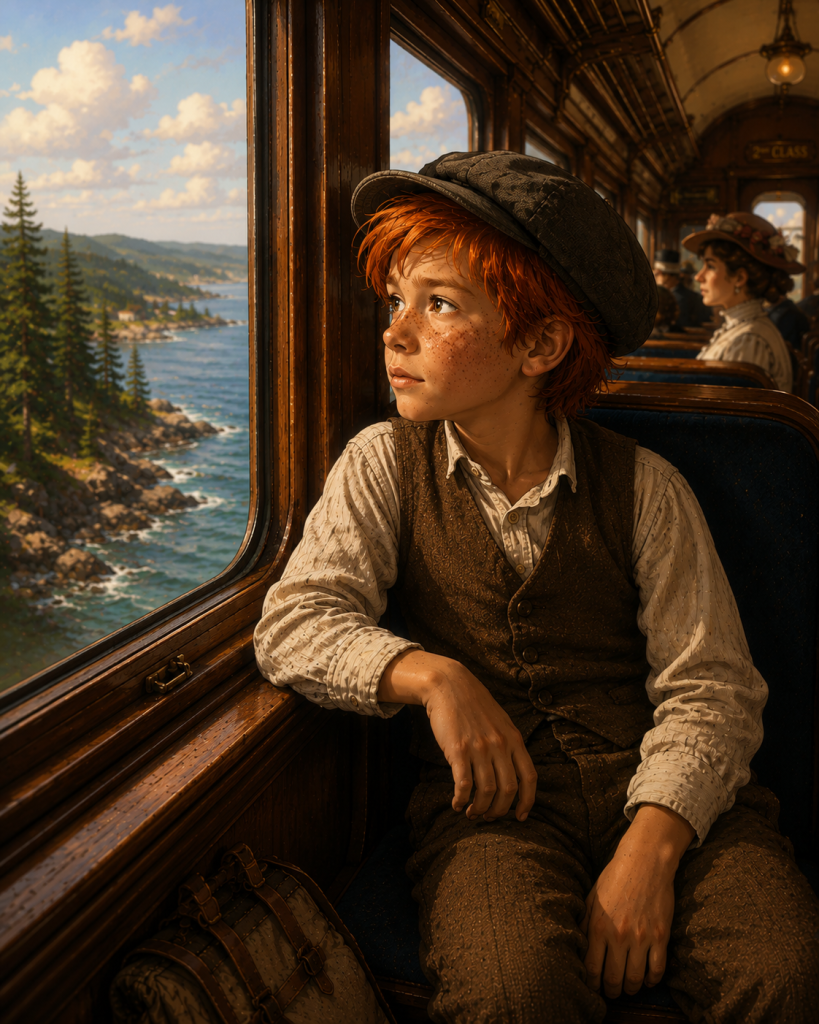
The new world had already arrived. Steam whistles echoed from the railway. Catalogs from Eaton’s reached village homes. Young people read letters from Lowell describing electric streetlights, factory shifts, and wages paid in cash. The train offered an escape from the merchant-credit system that had shaped generations.

Your ancestor Gelas stood almost exactly at that crossroads. He likely knew people who could paddle a birchbark canoe through the rivers of the Acadian Peninsula and others who could run the looms of Lowell. His children would grow up in a world that was changing faster than any generation before them had experienced.

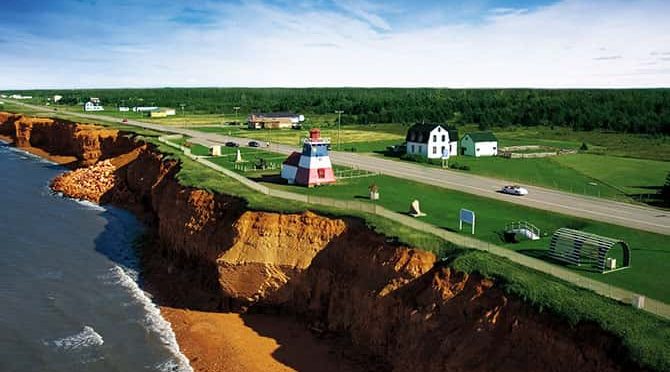
When I picture Grande-Anse in 1905, I don’t see isolated communities separated by rigid boundaries. I see a shoreline where Acadian fishermen, Mi’kmaq families, Jersey merchants, priests, lumbermen, and musicians all recognized one another by name. It was not a utopia—there were economic inequalities, prejudice, and hardship—but it was a shared human landscape. That, I suspect, is the world your grandfather was remembering when he spoke of fiddles, “Indian powwows,” and the life that existed before the train carried so many families south to Lowell.

Acadian Peninsula Exodus

My family is from Grande Anse and Caraquet, New Brunswick.
I have been trying to learn some of the reasons why my family left their farms and homes, in what is today, a really beautiful, idyllic place. Towns where they were founders, and had fought hard, being the few to survive and escape genocide in 1755.

While searching the train passenger manifests during the time my family left, there were thousands of people leaving the province at the same time.

This is the result of querying a research AI about the region’s history during that time period.

Looking at passenger manifests around 1915–1918, you’re seeing the tail end of a migration that had already been underway for decades. To someone tracing individual families, it can absolutely look like a sudden exodus because entire extended families often left within a few years of one another.

Several factors came together.

1. The “Acadian Exodus” was primarily economic

The biggest reason was simple: there wasn’t enough work.

Northeastern New Brunswick was heavily dependent on:

  • small subsistence farms
  • fishing
  • lumber camps
  • seasonal work

Families were large—often 10 or more children—and farms were continually divided among heirs until many became too small to support another generation. Wages in the Acadian regions were among the lowest in Canada.

Meanwhile, American industry was booming.

2. New England was hiring thousands of French-speaking workers

Massachusetts, Maine, Rhode Island, and New Hampshire desperately needed labor for:

  • textile mills
  • shoe factories
  • paper mills
  • railroads
  • granite quarries

Acadians could often work alongside Québécois and other Acadians, so language wasn’t nearly as much of a barrier.

Entire neighborhoods of places like:

  • Lowell
  • Lawrence
  • Manchester
  • Lewiston
  • Biddeford
  • Fall River

developed large French-speaking populations, making migration even easier because relatives and neighbors were already there.

3. Railroads made migration much easier

By 1916, the Intercolonial Railway connected much of New Brunswick to New England.

Someone from Caraquet, Bathurst, Néguac, or Campbellton could board a train and, after a few connections, arrive in Boston or Manchester in a day or two.

Passenger manifests from this period therefore record large numbers of Acadian families traveling together.

4. World War I accelerated movement

The war had mixed effects.

Many young men enlisted in the Canadian Expeditionary Force.

But wartime industry in the United States was expanding rapidly, and although the U.S. did not enter the war until 1917, factories had already begun producing goods for the Allies.

Industrial wages in New England could easily exceed what someone earned in rural New Brunswick.

5. Social networks created a chain migration

Perhaps the biggest factor was that migration became self-perpetuating.

One brother would leave.

He’d write home:

“There’s work here.”

A cousin followed.

Then sisters.

Then parents.

Then neighbors.

Soon an entire parish might have dozens of former residents living in the same American city. Historians describe this as chain migration, and it became a defining feature of Acadian emigration.

Was there a specific crisis in 1916?

Not usually.

Unlike the 1755 Deportation, there wasn’t a single event forcing people out.

Instead, 1916 falls within a long period—roughly 1890 to the 1920s—when New Brunswick experienced one of the highest rates of out-migration in Canada. Contemporary observers worried that entire rural communities were being drained of young people. Historians now argue that, beyond economics, many rural residents felt isolated from the modernization taking place elsewhere in North America, making cities like Boston, Saint John, and Vancouver increasingly attractive destinations.


4

Grande-Anse, on the Acadian Peninsula, was a small fishing and farming community. Around 1900, it had several structural disadvantages:

  • The local economy was seasonal. Fishing, logging, and small farms all provided income only during part of the year.
  • Farms had been subdivided over generations until many could no longer support large families.
  • There were relatively few industries that offered year-round wages.
  • Population growth was rapid, meaning there simply weren’t enough jobs for young adults.

By contrast, Lowell represented almost the exact opposite.

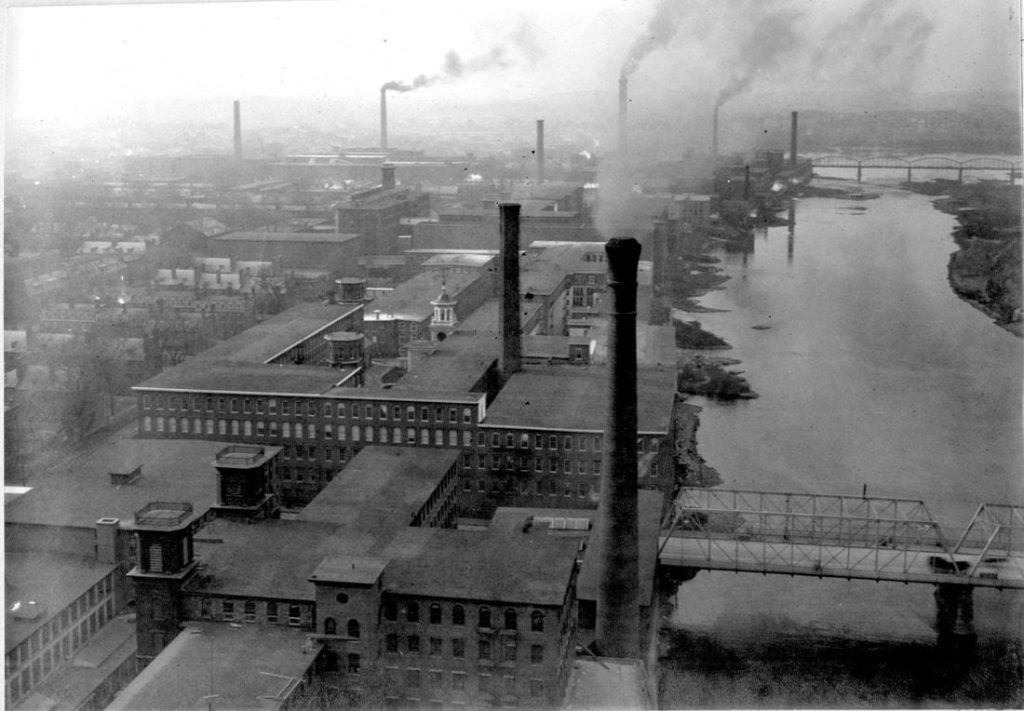
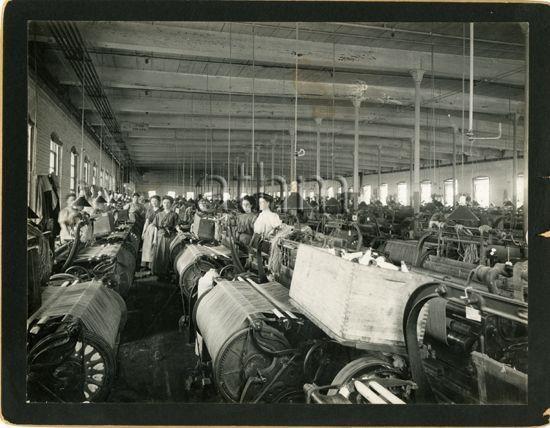
In 1916, Lowell was still one of the largest textile manufacturing centers in the world. Although the city’s peak had passed by the late nineteenth century, its enormous mills still employed tens of thousands of workers. French-speaking immigrants were especially welcome because mill owners already employed large numbers of French Canadians from Québec. An Acadian arriving from New Brunswick could often find coworkers who spoke essentially the same language.

For many Acadians, the move wasn’t viewed as permanent at first. They expected to:

  • work in the mills,
  • save money,
  • perhaps buy land back home,
  • or return after a few years.

Many never did.

Why Lowell specifically?

This is where family networks became incredibly important.

Imagine one young man from Grande-Anse leaving in 1905.

He gets hired at a mill.

He writes home:

“They’re hiring. I can get your son a job.”

The next year his brother comes.

Then cousins.

Then neighbors.

Eventually, an entire street in Lowell might be home to families from the same parish in New Brunswick.

By 1916, this process had been going on for decades. Passenger manifests often show multiple unrelated families from Grande-Anse traveling on the same train because they were all headed toward the same established community.

Lowell’s “Little Canada”

Lowell contained a large French-speaking district often called Little Canada. While it was primarily populated by Québécois immigrants, Acadians fit into that community very naturally. They found:

  • Catholic churches with French-speaking priests.
  • French-language schools.
  • French newspapers.
  • Mutual aid societies.
  • Grocery stores carrying familiar foods.
  • Boarding houses owned by other Acadian or French Canadian families.

In many ways, they could cross an international border without immediately feeling like strangers.

Grande-Anse had another challenge

The Acadian Peninsula didn’t industrialize as quickly as southern New Brunswick. Places like Moncton and Saint John offered more factory and railway employment, but Grande-Anse remained heavily dependent on traditional occupations. As rail travel became easier, it often made just as much economic sense to continue on to Massachusetts, where wages could be two or three times higher.


There’s a good chance your relatives were following earlier families from Grande-Anse who had already established themselves in Lowell by the late 1800s. Once one branch succeeded, it was common for siblings, cousins, nieces, nephews, and even unrelated neighbors from the same parish to follow over the next 10–20 years.

The Robin Company’s influence

By the early 1800s, the Jersey merchant firms—especially Charles Robin & Company and its successors—controlled much of the cod fishery around the Baie des Chaleurs and later established a strong presence in Caraquet and surrounding communities. Grande-Anse fell within this commercial sphere.

A fisherman from Grande-Anse often didn’t:

  • own the boat,
  • own the nets,
  • buy supplies with cash,
  • or sell fish on an open market.

Instead, he received everything on credit from the Robin store.

At the end of the season he brought his cod to Robin, who determined:

  • the value of the fish,
  • the price of the supplies,
  • and whether the fisherman still owed money.

This was the famous truck system.

A cycle that was hard to escape

The truck system wasn’t always intentionally abusive—it also allowed families to survive bad fishing years—but it created a structural dependence.

A typical cycle looked something like this:

  • Spring: borrow salt, hooks, food, flour, molasses, and clothing.
  • Summer: fish all season.
  • Autumn: deliver the catch.
  • Winter: discover that the catch barely covered the debt.
  • Next spring: borrow again.

Many families lived this way for generations. Because there was little cash circulating, it was difficult to accumulate savings, buy land, or start an independent business. Historians note that merchant credit tied fishermen to particular firms and communities, limiting their economic mobility.

Why this mattered by 1916

Here’s the interesting part.

The Robin Company’s dominance had already begun to weaken by the late 1800s as the cod trade changed, competition increased, and the economy gradually shifted toward cash transactions.

But many Acadian communities, including those on the Acadian Peninsula, were left with the legacy of that older system:

  • few local industries,
  • little accumulated capital,
  • dependence on seasonal work,
  • and limited opportunities for the next generation.

So when a son from Grande-Anse heard that he could earn regular weekly wages in a Lowell textile mill, the comparison was stark:

  • Grande-Anse: seasonal fishing, uncertain income, often debt.
  • Lowell: cash wages every week, even if the mill work was exhausting.

For many families, that was enough to tip the balance.


One thing that has always struck me is that the Acadian migration to Lowell wasn’t just people leaving poverty—it was people leaving an entire economic system. Their grandparents had lived in a merchant-credit economy where fish was almost a form of currency. Their children found themselves earning cash every Friday in a Massachusetts mill. That transition, more than any single event, explains why so many Acadian families from places like Grande-Anse boarded those trains between 1900 and 1920.