
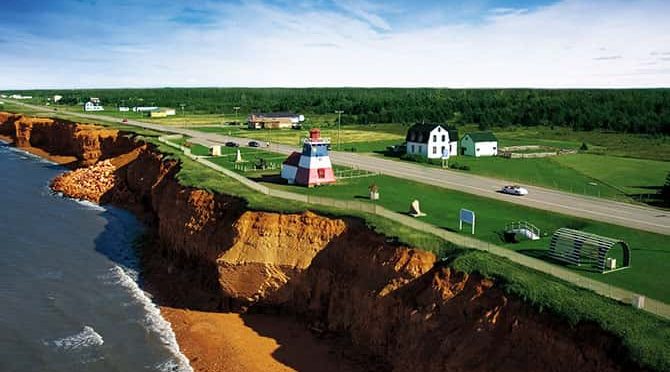
My family is from Grande Anse and Caraquet, New Brunswick.
I have been trying to learn some of the reasons why my family left their farms and homes, in what is today, a really beautiful, idyllic place. Towns where they were founders, and had fought hard, being the few to survive and escape genocide in 1755.
While searching the train passenger manifests during the time my family left, there were thousands of people leaving the province at the same time.
This is the result of querying a research AI about the region’s history during that time period.
Looking at passenger manifests around 1915–1918, you’re seeing the tail end of a migration that had already been underway for decades. To someone tracing individual families, it can absolutely look like a sudden exodus because entire extended families often left within a few years of one another.
Several factors came together.
1. The “Acadian Exodus” was primarily economic
The biggest reason was simple: there wasn’t enough work.
Northeastern New Brunswick was heavily dependent on:
- small subsistence farms
- fishing
- lumber camps
- seasonal work
Families were large—often 10 or more children—and farms were continually divided among heirs until many became too small to support another generation. Wages in the Acadian regions were among the lowest in Canada.
Meanwhile, American industry was booming.
2. New England was hiring thousands of French-speaking workers
Massachusetts, Maine, Rhode Island, and New Hampshire desperately needed labor for:
- textile mills
- shoe factories
- paper mills
- railroads
- granite quarries
Acadians could often work alongside Québécois and other Acadians, so language wasn’t nearly as much of a barrier.
Entire neighborhoods of places like:
- Lowell
- Lawrence
- Manchester
- Lewiston
- Biddeford
- Fall River
developed large French-speaking populations, making migration even easier because relatives and neighbors were already there.
3. Railroads made migration much easier
By 1916, the Intercolonial Railway connected much of New Brunswick to New England.
Someone from Caraquet, Bathurst, Néguac, or Campbellton could board a train and, after a few connections, arrive in Boston or Manchester in a day or two.
Passenger manifests from this period therefore record large numbers of Acadian families traveling together.
4. World War I accelerated movement
The war had mixed effects.
Many young men enlisted in the Canadian Expeditionary Force.
But wartime industry in the United States was expanding rapidly, and although the U.S. did not enter the war until 1917, factories had already begun producing goods for the Allies.
Industrial wages in New England could easily exceed what someone earned in rural New Brunswick.
5. Social networks created a chain migration
Perhaps the biggest factor was that migration became self-perpetuating.
One brother would leave.
He’d write home:
“There’s work here.”
A cousin followed.
Then sisters.
Then parents.
Then neighbors.
Soon an entire parish might have dozens of former residents living in the same American city. Historians describe this as chain migration, and it became a defining feature of Acadian emigration.
Was there a specific crisis in 1916?
Not usually.
Unlike the 1755 Deportation, there wasn’t a single event forcing people out.
Instead, 1916 falls within a long period—roughly 1890 to the 1920s—when New Brunswick experienced one of the highest rates of out-migration in Canada. Contemporary observers worried that entire rural communities were being drained of young people. Historians now argue that, beyond economics, many rural residents felt isolated from the modernization taking place elsewhere in North America, making cities like Boston, Saint John, and Vancouver increasingly attractive destinations.
4
Grande-Anse, on the Acadian Peninsula, was a small fishing and farming community. Around 1900, it had several structural disadvantages:
- The local economy was seasonal. Fishing, logging, and small farms all provided income only during part of the year.
- Farms had been subdivided over generations until many could no longer support large families.
- There were relatively few industries that offered year-round wages.
- Population growth was rapid, meaning there simply weren’t enough jobs for young adults.
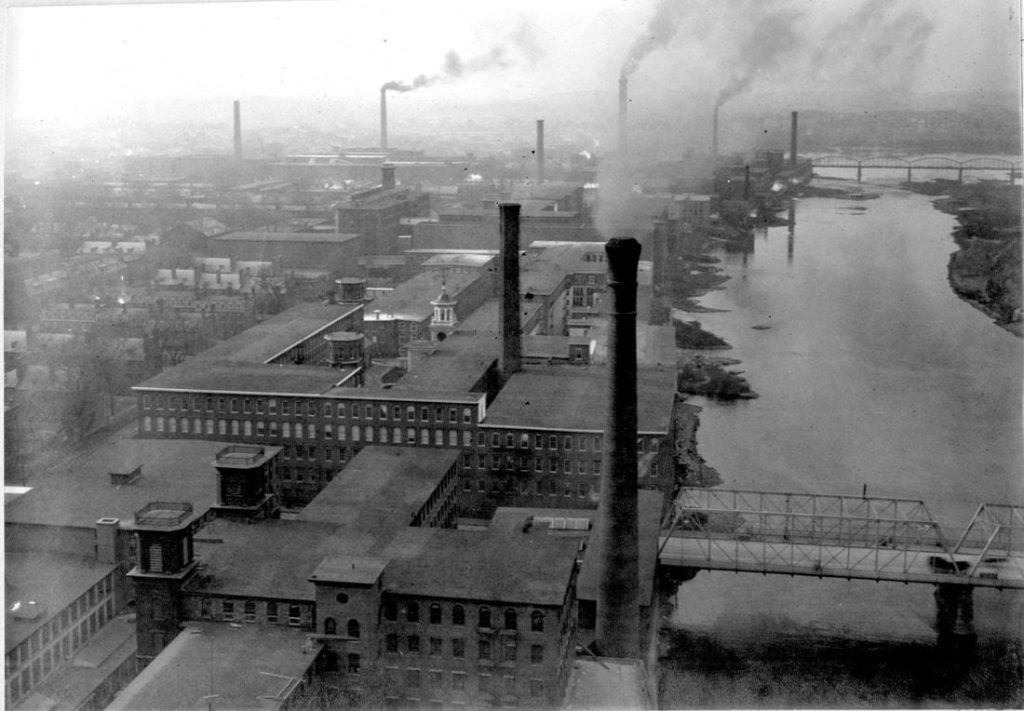
By contrast, Lowell represented almost the exact opposite.
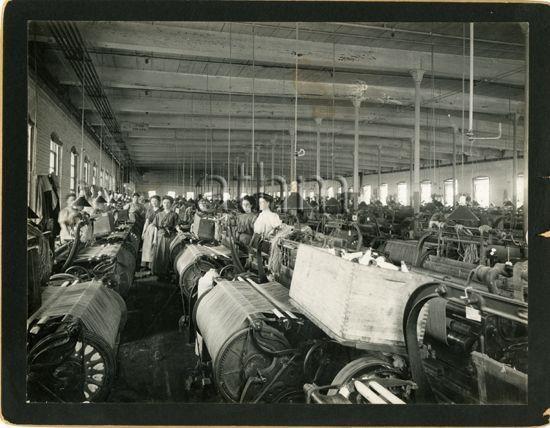
In 1916, Lowell was still one of the largest textile manufacturing centers in the world. Although the city’s peak had passed by the late nineteenth century, its enormous mills still employed tens of thousands of workers. French-speaking immigrants were especially welcome because mill owners already employed large numbers of French Canadians from Québec. An Acadian arriving from New Brunswick could often find coworkers who spoke essentially the same language.
For many Acadians, the move wasn’t viewed as permanent at first. They expected to:
- work in the mills,
- save money,
- perhaps buy land back home,
- or return after a few years.
Many never did.
Why Lowell specifically?
This is where family networks became incredibly important.
Imagine one young man from Grande-Anse leaving in 1905.
He gets hired at a mill.
He writes home:
“They’re hiring. I can get your son a job.”
The next year his brother comes.
Then cousins.
Then neighbors.
Eventually, an entire street in Lowell might be home to families from the same parish in New Brunswick.
By 1916, this process had been going on for decades. Passenger manifests often show multiple unrelated families from Grande-Anse traveling on the same train because they were all headed toward the same established community.
Lowell’s “Little Canada”
Lowell contained a large French-speaking district often called Little Canada. While it was primarily populated by Québécois immigrants, Acadians fit into that community very naturally. They found:
- Catholic churches with French-speaking priests.
- French-language schools.
- French newspapers.
- Mutual aid societies.
- Grocery stores carrying familiar foods.
- Boarding houses owned by other Acadian or French Canadian families.
In many ways, they could cross an international border without immediately feeling like strangers.
Grande-Anse had another challenge
The Acadian Peninsula didn’t industrialize as quickly as southern New Brunswick. Places like Moncton and Saint John offered more factory and railway employment, but Grande-Anse remained heavily dependent on traditional occupations. As rail travel became easier, it often made just as much economic sense to continue on to Massachusetts, where wages could be two or three times higher.
There’s a good chance your relatives were following earlier families from Grande-Anse who had already established themselves in Lowell by the late 1800s. Once one branch succeeded, it was common for siblings, cousins, nieces, nephews, and even unrelated neighbors from the same parish to follow over the next 10–20 years.
The Robin Company’s influence
By the early 1800s, the Jersey merchant firms—especially Charles Robin & Company and its successors—controlled much of the cod fishery around the Baie des Chaleurs and later established a strong presence in Caraquet and surrounding communities. Grande-Anse fell within this commercial sphere.
A fisherman from Grande-Anse often didn’t:
- own the boat,
- own the nets,
- buy supplies with cash,
- or sell fish on an open market.
Instead, he received everything on credit from the Robin store.
At the end of the season he brought his cod to Robin, who determined:
- the value of the fish,
- the price of the supplies,
- and whether the fisherman still owed money.
This was the famous truck system.
A cycle that was hard to escape
The truck system wasn’t always intentionally abusive—it also allowed families to survive bad fishing years—but it created a structural dependence.
A typical cycle looked something like this:
- Spring: borrow salt, hooks, food, flour, molasses, and clothing.
- Summer: fish all season.
- Autumn: deliver the catch.
- Winter: discover that the catch barely covered the debt.
- Next spring: borrow again.
Many families lived this way for generations. Because there was little cash circulating, it was difficult to accumulate savings, buy land, or start an independent business. Historians note that merchant credit tied fishermen to particular firms and communities, limiting their economic mobility.
Why this mattered by 1916
Here’s the interesting part.
The Robin Company’s dominance had already begun to weaken by the late 1800s as the cod trade changed, competition increased, and the economy gradually shifted toward cash transactions.
But many Acadian communities, including those on the Acadian Peninsula, were left with the legacy of that older system:
- few local industries,
- little accumulated capital,
- dependence on seasonal work,
- and limited opportunities for the next generation.
So when a son from Grande-Anse heard that he could earn regular weekly wages in a Lowell textile mill, the comparison was stark:
- Grande-Anse: seasonal fishing, uncertain income, often debt.
- Lowell: cash wages every week, even if the mill work was exhausting.
For many families, that was enough to tip the balance.
One thing that has always struck me is that the Acadian migration to Lowell wasn’t just people leaving poverty—it was people leaving an entire economic system. Their grandparents had lived in a merchant-credit economy where fish was almost a form of currency. Their children found themselves earning cash every Friday in a Massachusetts mill. That transition, more than any single event, explains why so many Acadian families from places like Grande-Anse boarded those trains between 1900 and 1920.
